
Cook County Property Activation Program
Client: Cook County Land Bank Authority, Cook County Bureau of Economic Development, Cook County Board of Commissioners - Office of the President
Partner: University of Chicago (Metcalf Fellow)
Opportunity
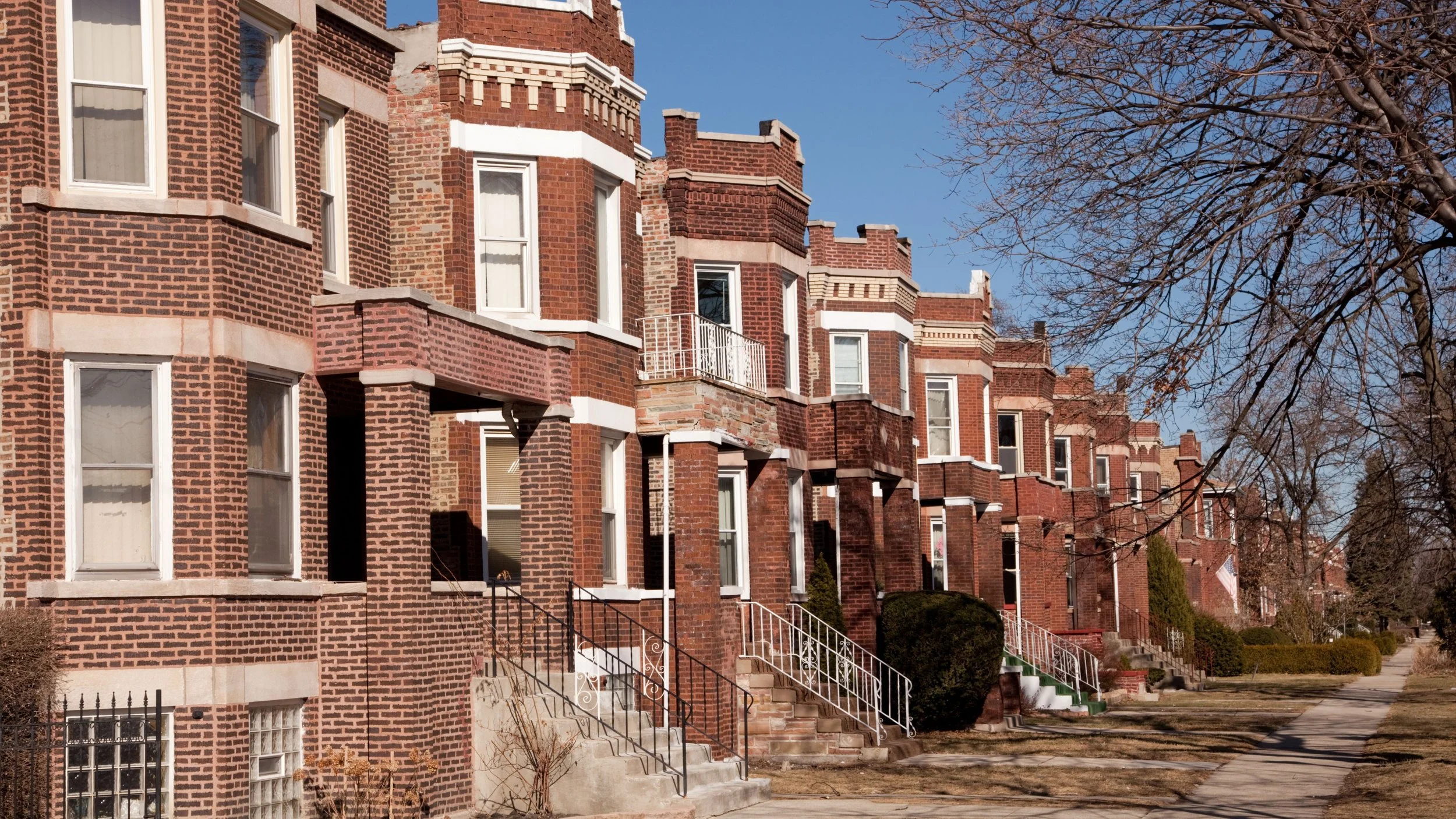
Cook County has more than 50,000 vacant and abandoned properties, most of which are concentrated in already underinvested Black and Latine communities in the South and West Corridors. Nearly 30,000 of these properties are eligible for the Annual Tax Sale and Scavenger Sale systems, which Cook County has long relied on to recover unpaid property taxes and return delinquent parcels (those 3+ years tax delinquent) to productive use.
“Activating vacant properties is a powerful driver of economic growth — restoring market strength, attracting investment, and expanding opportunity across Cook County.”
However, an evaluation from the Harris School of Public Policy at the University of Chicago found that these sales mechanisms are now ineffective. The Scavenger Sale has increasingly fueled private speculation rather than reactivation — in the 2019 Scavenger Sale alone, roughly 61% of properties received no bids, and only an estimated 4,500 of the nearly 30,000 properties were immediately economically viable.
At the same time, two significant legal developments reshaped the landscape. The Tyler v. Hennepin County ruling — a 2023 U.S. Supreme Court decision holding that governments must return surplus property value to owners when seizing land for unpaid taxes — closed a longstanding loophole that had enabled speculative investors to profit from tax sales at the expense of low-income owners. Recent amendments to the Illinois Property Tax Code (IL PA 103-0555) further reformed the system by making the Scavenger Sale optional and giving local governments greater flexibility to intervene earlier on abandoned properties, including after just one failed tax sale attempt.
While this legislation created significant new opportunities, the County needed support to operationalize these reforms, assess system and budget implications, and build momentum to translate policy change into real redevelopment outcomes. This work is not solely about property disposition. It is a core economic development strategy. Vacant and tax-delinquent properties suppress local markets, reduce municipal revenue, weaken neighborhood business corridors, and discourage private investment. Reactivating these properties is essential to restoring functioning housing markets, strengthening commercial vitality, and advancing inclusive economic growth across Cook County.
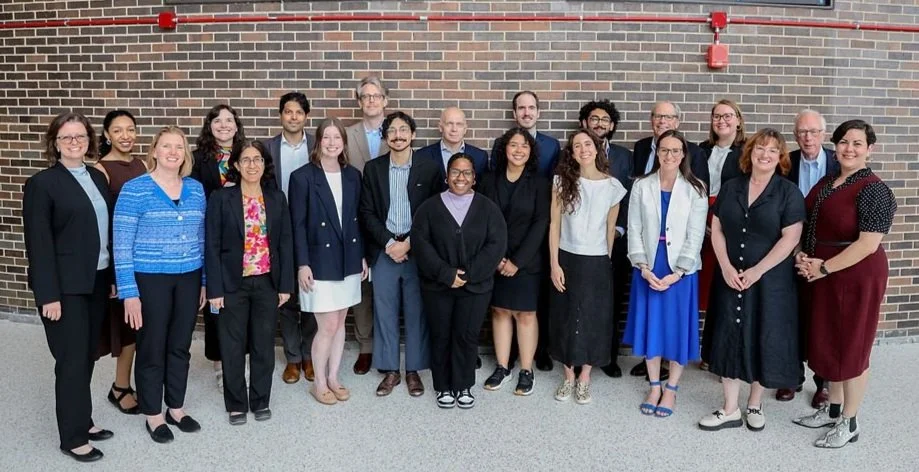
Civic Consulting Alliance was well-positioned to help accelerate this critical effort, drawing on strong relationships with Cook County leadership to work across the six county agencies with responsibilities tied to the property activation program, tight deadlines for the annual budget process, expiring redemption periods, and the potential for significant process changes across County departments and municipalities.
Action
The Bureau of Economic Development (BED) and the Cook County Land Bank Authority (CCLBA) engaged Civic Consulting Alliance to advance a coordinated property activation strategy that directly supports the County’s broader economic development, neighborhood revitalization, and equitable growth priorities.
The project was conducted in partnership with a University of Chicago Metcalf Fellow embedded with the project team, who contributed research support, analysis of stakeholder interviews, and data analysis throughout the engagement.
The engagement focused on two core workstreams:
Evaluating current mechanisms for property reactivation — including the No Cash Bid program, CCLBA processes, and abandonment.
Developing a reimagined property reactivation mechanism aligned with the County’s priorities.
Drawing on stakeholder interviews with more than 20 taxing districts and County offices, desk research, peer land bank analysis, and budget review, the team developed short- and long-term strategies to enable earlier, more strategic intervention on long-term tax-delinquent properties.
In a preliminary phase of work, the team helped the County develop a proposal for consideration in the annual budget process. This work included:
Ideation: Drafting Functional Building Blocks that identified new possibilities created by this legislation, defined the high-level scope and functions of the program, conducted a landscape scan of comparable models across the country, and translated the policy vision into core operational components (e.g., title clearing, parcel assessment, community engagement, property maintenance, and resale strategy).
Iteration: Facilitating conversations with key County offices — including the Assessor, Treasurer, and Clerk — to surface potential areas for collaboration, anticipated challenges, and key concerns.
Proposal: Developing a scenario-based staffing model to inform early resource planning, identifying six additional staff positions — including Acquisition Specialists, Asset Managers, a Program Manager, and an Administrative Assistant — with estimated personnel costs of approximately $565,000 and projected operating costs of $4.3 million to support expanded property acquisition and management at scale.
“We could not have advanced this work without Civic Consulting Alliance. Their ability to work across multiple County departments, respond nimbly to critical deadlines, and translate complex policy changes into actionable strategies has been essential in positioning Cook County to make a meaningful impact on long-vacant properties and the communities they affect.”
Impact
This work positions Cook County to translate recent policy reforms into actionable systems that unlock redevelopment of vacant and abandoned properties at scale.
Our team’s research surfaced critical baseline findings to anchor the work: of the nearly 30,000 properties in the County’s inventory, only roughly 15% were immediately economically viable for reactivation, while the CCLBA and No Cash Bid program combined to produce an average of just 549 dispositions per year — underscoring the significant gap between the scale of the problem and the County’s current capacity to address it.
The potential upside is equally clear. Over its first ten years of operation, CCLBA activity has already generated an estimated $58.1 million in property tax revenue, supported more than 1,400 jobs, and contributed to over $1.8 billion in total economic impact across Cook County — returning nearly $10 in economic value for every public dollar spent. Expanding the County’s capacity to intervene earlier and more strategically on tax-delinquent properties would dramatically scale these outcomes.
Beyond addressing blight, this initiative is a catalytic economic development intervention. Property activation strengthens local housing markets, restores confidence for private investment, expands the local tax base, and creates conditions for small business growth and neighborhood reinvestment. By enabling taxing districts to more effectively access delinquent properties and aligning budget, process, and implementation strategies, the County can accelerate reinvestment in neighborhoods that have experienced disproportionately high vacancy rates, suppressed home values, and limited access to economic opportunity.
Over time, these efforts will support economic development, stabilize communities, and create pathways for long-term revitalization in underinvested Black and Latine neighborhoods, turning once-blighted properties into community assets and advancing more equitable growth across Cook County.
What’s Next
Over the year ahead, Civic Consulting Alliance anticipates supporting additional phases of work to advance the County’s efforts, including the implementation of process changes and coordination strategies.
Building on work currently being scoped by the Urban Land Institute (ULI), a Technical Assistance Panel is expected to assess vacant properties, identify those most ready for reuse, evaluate market potential, understand redevelopment barriers, and recommend strategies for long-term revitalization. CCA will continue to serve as a cross-agency coordinator — helping the County move from planning to implementation and ensuring that the momentum created by recent policy reforms translates into lasting community impact.