
Partnership for Safe and Peaceful Communities (PSPC)
In 2016, a coalition of funders formed the Partnership for Safe and Peaceful Communities (PSPC)—today a collaborative of more than 40 funders working to reduce gun violence and rebuild police legitimacy in Chicago.
“We cannot continue to do the same thing, hoping each year is going to be better.”
PSPC’s model is innovative, aligning philanthropic stakeholders with diverse missions to support proven and promising approaches to reduce gun violence. From the beginning, Civic Consulting Alliance has driven this work forward, building upon our body of Public Safety and Criminal Justice platform work and our experience managing complex collaboratives to provide project management, operational, and fundraising support.
In 2019, we:
Convened monthly meetings of the Working Group, PSPC’s executive committee, to provide strategic direction and oversight;
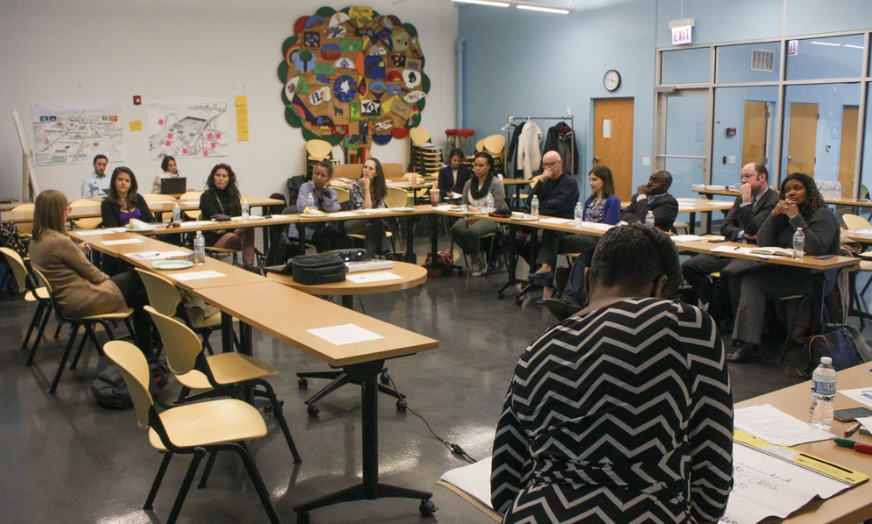
Convened bimonthly meetings of all funder members to align on investment strategies, review progress, and share lessons learned;
Managed the communications team to plan and execute communications strategies; and
Coordinated with teams at UChicago Crime Labs, Northwestern University’s Neighborhood & Network Initiative, and MarginNotes conducting evaluations of PSPC’s direct services strategies—Heartland Alliance’s READI Chicago, Metropolitan Family Services’ Communities Partnering 4 Peace (CP4P), and the Chicago Fund for Safe and Peaceful Communities, respectively.
Outputs
PSPC grew from 30 members in 2018 to more than 40 in 2019, including funders who had not previously supported public safety issues—raising awareness of and support for violence reduction in Chicago
Refined investment and fundraising strategy for 2019-2020
Refined police reform and community engagement strategies focused on: continuing to support the Grassroots Alliance for Police Accountability’s work on community-police oversight, and expanding the Neighborhood Policing Initiative
More than $75 million committed to support an evidence-based portfolio of strategies to reduce gun violence, which included:
Street outreach and transitional jobs
Police reform and community engagement
Gun policy reform
Rapid-response grants for grassroots events and projects
Outcomes
READI Chicago connected 500 men who are highly impacted by gun violence with paid transitional jobs, cognitive behavioral therapy, and support services
CP4P reached an average of more than 4000 individuals per month across its nine service neighborhoods, hosting Light in the Night events, connecting participants to conflict mediation, street outreach, case management, re-entry, and victim assistance services through community-based organizations
In January 2019, Governor Pritzker signed new legislation that requires Illinois firearms dealers to attain licenses from the state, giving the state greater oversight of gun dealers
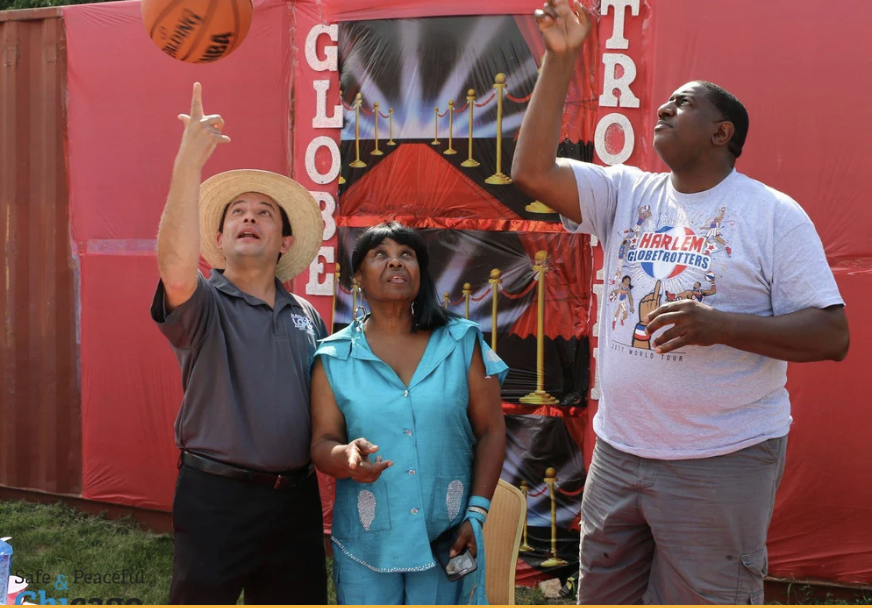
In summer 2018, nearly 40,000 Chicagoans attended community events organized by 132 neighborhood organizations with funding from the Chicago Fund for Safe and Peaceful Communities
There is evidence to suggest that PSPC investments may be helping to reduce gun violence. For example, from 2016 to 2018, the number of homicides in Chicago decreased by 27%, while shootings dropped by 33%. In the first half of 2019, these trends have continued.
While these statistics are encouraging, much remains to be done—and, as we enter the collaborative’s third year, PSPC funders are committed to doing more. Ultimately, PSPC hopes that its investments in innovative interventions will scale evidence-based gun violence prevention strategies that can inform public policy and secure public funding—sustainably and substantially reducing violence in Chicago.
“Civic Consulting Alliance has been a strong partner for PSPC. Civic Consulting Alliance’s depth of knowledge and incisive approach has helped our unique collaborative drive progress towards our goal of reducing gun violence in Chicago.”
“While the reduction in violence that we’ve seen over the last few years is encouraging and is a testament to the work of our community members and groups as well as the efforts of our public safety teams, there is no level of gun violence that is acceptable, and much remains to be done.”