Summary
Clients: Illinois Department of Commerce and Economic Opportunity (DCEO)
Partner: Crowe LLP
Project: A stakeholder engagement effort to help DCEO convene and learn from an Opportunity Zones 2.0 Ad Hoc Advisory Board as the State nominates its next round of Opportunity Zones that can incentivize private capital into historically underinvested communities.
Outcome: A structured advisory process that brought state agencies and outside experts together to inform how Illinois nominates its new Opportunity Zones. Grounded in two facilitated Advisory Board sessions and synthesized into summary memos, it delivers clear, actionable recommendations to help DCEO recommend zones that attract private investment and deliver lasting benefits to communities.
Opportunity
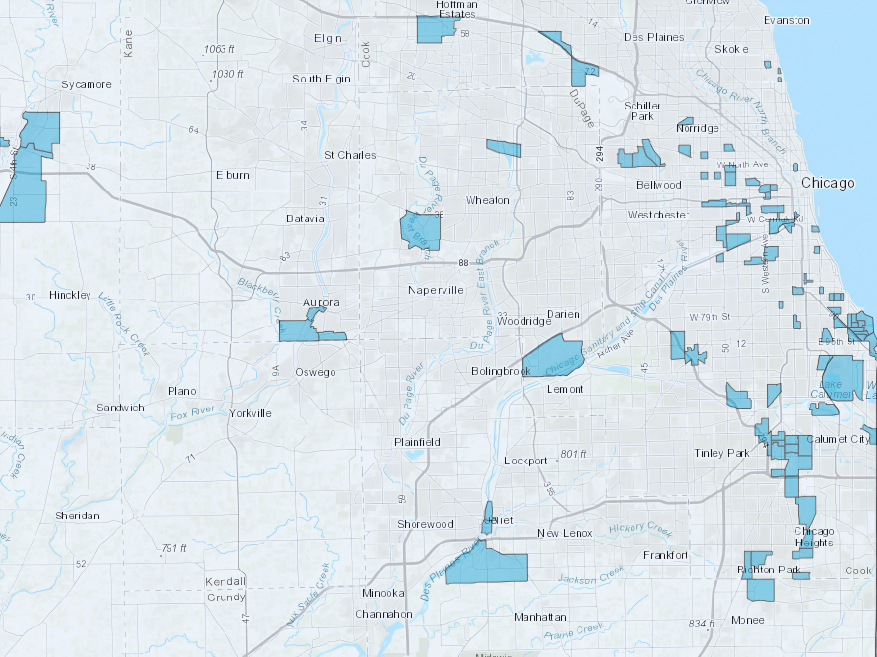
Opportunity Zones offer tax incentives to draw private capital into historically underinvested communities. The first round, created by the 2017 federal Tax Cuts and Jobs Act and designated in Illinois in 2018, fell short in the state: by the end of 2020, only one-fifth of the state's designated tracts had received any Opportunity Zone investment, the lowest share of any state. DCEO's own review pointed to one reason: the 2018 selections favored spreading zones across the state over choosing places ready to attract investment.
With a new federal round of designations, Illinois had the chance to rethink where its zones should go. DCEO received a high volume of nominations from local governments, economic development organizations, and private sector partners, ranging from minimal submissions to detailed proposals with specific projects. To choose wisely, the State needed a structured way to inform its approach, balancing expert input and hard data with on-the-ground knowledge.
Given CCA's track record with the State and its role as a neutral convener that can bring in pro bono expertise, DCEO asked CCA to help design and facilitate the process.
2
facilitated Advisory Board sessions
8
recommendations to guide final nominations
10-year
investment horizon for the new zones
Action
CCA and pro bono partner Crowe designed and facilitated an Advisory Board process for DCEO.
“Illinois has a real chance to get Opportunity Zones right and garner investment in communities that need it. We were glad to partner with CCA to help DCEO hear from the people closest to the work and build a designation strategy grounded in what communities need.”
Design: CCA and Crowe worked with DCEO leaders to define the Ad Hoc Advisory Board’s purpose, priority topics, and meeting design, from session agendas to breakout questions on investment readiness, housing, clustering, and data gaps. At the center was a core tradeoff: whether Illinois's zones should prioritize shovel-ready investment, long-term transformation aligned with the state's economic strategy, or stabilizing high-need communities.
Facilitate: Crowe and CCA co-facilitated two virtual sessions in March and May, including small-group breakouts, where state agencies and external experts weighed in on DCEO’s evaluation framework and designation strategy, including which indicators best capture investment potential and how needs differ across urban, suburban, and rural communities.
Synthesize: Crowe captured each session in a summary memo with cross-cutting themes and suggested actions, from prioritizing investment-ready tracts to aligning designations with existing state and local incentives.
Impact
By grounding designations in execution, the work helps ensure Opportunity Zones bring real investment, jobs, and housing to the Illinois communities that need them most.
DCEO came away with clear, consensus-driven guidance for its designation strategy: prioritize areas with credible paths to project delivery, balance early wins with long-term transformation, and pair statewide data with local insight so high-need communities are not left out.
The recommendations gave the State a practical framework for its final selections, which were approved in November 2026. and a plan for what comes next when Opportunity Zones 2.0 take effect January 1, 2027, including investor outreach, project matchmaking, and clearer marketing of available incentives.