Summary
Clients: Chicago Police Department (CPD), Office of Community Policing
Training Thought Partners: Accenture, BMO, Charlotte-Mecklenburg Police Department, Chicago Transit Authority, CIBC, JPMorgan Chase, Kendall College, Lettuce Entertain You, Marin County (CA), PNC Bank, United Airlines, University of New England (Australia), and WEC Energy Group
Project: Sustained engagement to help the Chicago Police Department operationalize a department-wide approach to community policing. Turning CCA’s earlier assessment and recommendations into a preliminary prioritization plan, governance structure, and timeline; informing the design of a new department-wide foundational training module.
Outcome: An initial implementation-planning package that equips CPD's Office of Community Policing to put community policing assessment recommendations into practice, with guiding principles, a governance structure, a readiness assessment, and a high-level, sequenced timeline to move from recommendations to execution. Grounded in interviews with community policing staff and a readiness assessment of the office's core capabilities, this project intended to jump-start initial implementation.
Opportunity
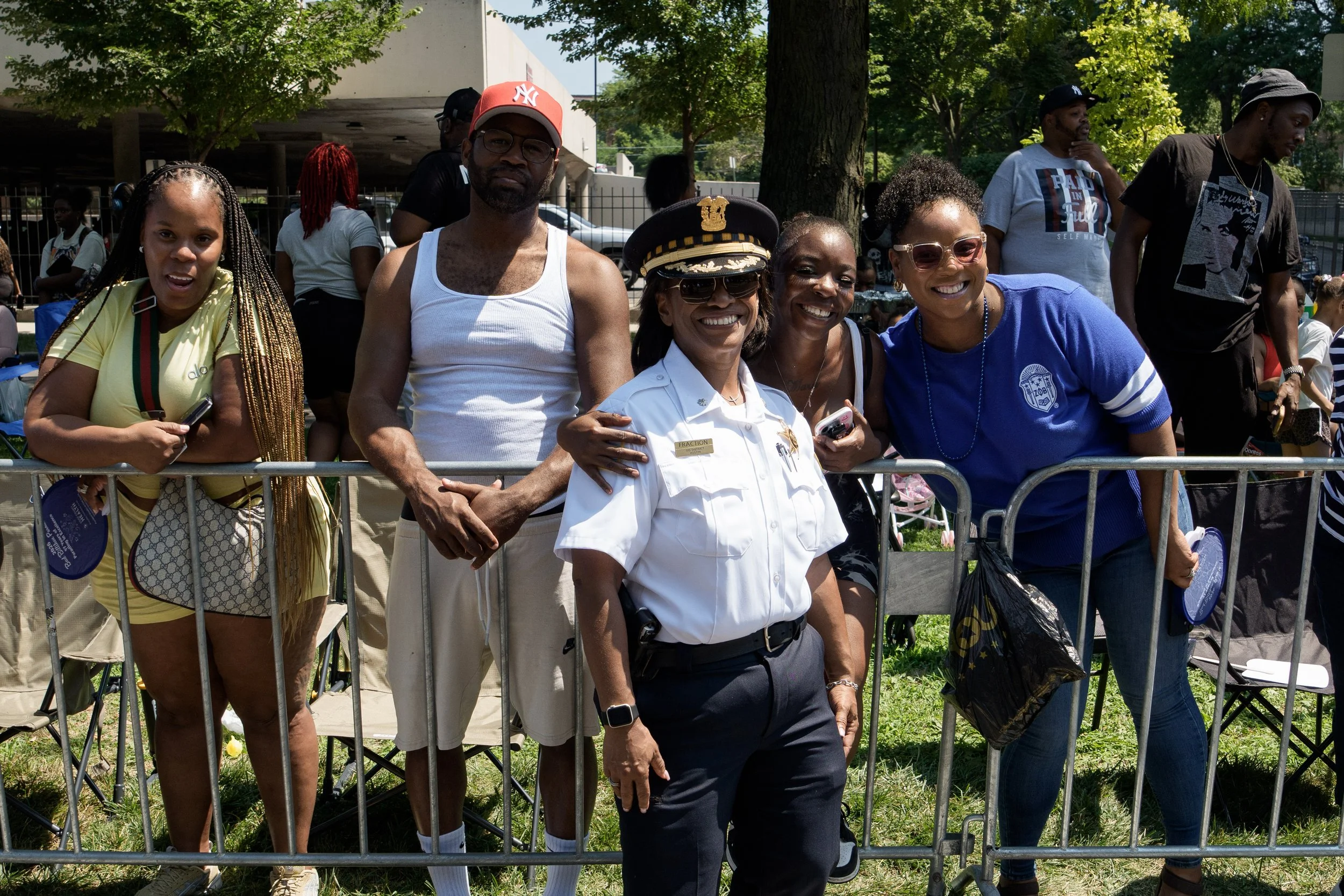
Community policing builds trust and collaboration between officers and the communities they serve, and it is central to the constitutional, accountable policing required by Chicago's 2019 Consent Decree. CCA worked closely with CPD members, advisory and oversight bodies, and community members to assess CPD's community policing work and develop nine recommendations to make it a department-wide approach. The work is reflected in our April 2026 Community Policing Assessment & Recommendations Report.
But recommendations are only as good as their execution. CPD needed to translate them into an actionable implementation plan, one that clarified how decisions would get made, who would be responsible for what, whether the office had the capabilities to deliver, and in what sequence the work should unfold.
CPD's Office of Community Policing needs the infrastructure (principles, governance, a readiness check, and a realistic timeline) to carry the recommendations forward and sustain them through the department's leadership transitions and organizational complexity.
As a close partner to CPD in advancing these reforms, CCA was asked to continue its work to help ensure that every officer is a community policing officer.
Action
Building on the Community Policing Assessment & Recommendations, CCA worked in two phases: building the preliminary prioritization plan (Discover, Design, Deliver) and bringing in outside expertise to shape service training (Train).
“Building and maintaining trust with the communities we serve is at the foundation of the Chicago Police Department’s efforts to enhance safety across every neighborhood. We are grateful to the CCA and its partnership as we implement a department-wide structure that ensures community-focused policing is the responsibility of every CPD officer. ”
Discover: We interviewed community policing staff to define a set of implementation guiding principles and assessed the office's readiness to execute across strategic leadership, governance, project management, change management, and impact reporting.
Design: Our team designed an implementation governance model (including key roles, a decision-authority matrix, and a detailed RACI) alongside a macro-level timing-and-phasing plan mapping dependencies and sequencing across initiative categories.
Deliver: CCA delivered a key decisions package to CPD's Chief of Staff and the Executive Director of OCPR, laying out the outstanding decisions, a high-level timeline, and a governance proposal to move into detailed planning.
Train: Focused on service, CCA helped shape a new department-wide training module on serving the public. CCA gathered best practices from 23 subject matter experts and from peer police departments. Findings covered what makes training stick: leadership buy-in, credible instructors, hands-on practice, and measuring behavior change. They also showed that framing the training around "service" rather than "customer service" resonates more with officers.
Impact
Making trust-building part of every officer's daily work, rather than the job of a few programs, is key to a safer Chicago and to building trust with communities CPD serves. By clarifying roles, decision rights, and sequencing up front, this work helps move community policing from recommendations to practice across the department.
In the Independent Monitoring Team’s IMR-14 report, covering January through June 2026, CPD’s operational compliance, the measure of whether reforms are actually happening day to day, rose to 32% of monitorable Consent Decree paragraphs, up from about 26% six months earlier and 22% a year before. Over the same period, CPD reached preliminary compliance with 99% of paragraphs and secondary compliance with 73%. The department cited the completion of the two-year Community Policing Assessment with CCA among its key accomplishments for the period.
Keeping momentum through a leadership transition: When Superintendent Larry Snelling retired in July 2026, CCA shifted from the next phase of implementation planning to onboarding new leadership so the work would not stall. Community policing now sits in the Office of the First Deputy Superintendent under First Deputy Superintendent Antoinette Ursitti, with day-to-day leadership of community policing initiatives under Community Policing Chief Angel Novalez.
CCA meets with both the First Deputy and Chief as the assessment, recommendations, and early policy and training work foundational to department-wide implementation move forward.
This work supports and complements other community safety efforts of current and past CCA clients:
Civic Committee of the Commercial Club of Chicago’s Public Safety Task Force
Photos courtesy of the Chicicago Polie Department